#MotorTalkMonday - a guide to motor efficiency classes If you’ve ever looked at motor specs and wondered what IE1, IE2, IE3, IE4, or IE5 actually mean, you’re not alone. These…
#MotorTalkMonday - "sticksion" and why it matters Have you ever heard the term “sticksion”? It’s a concept introduced in the Cowern Papers (linked below) to describe the torque required to…
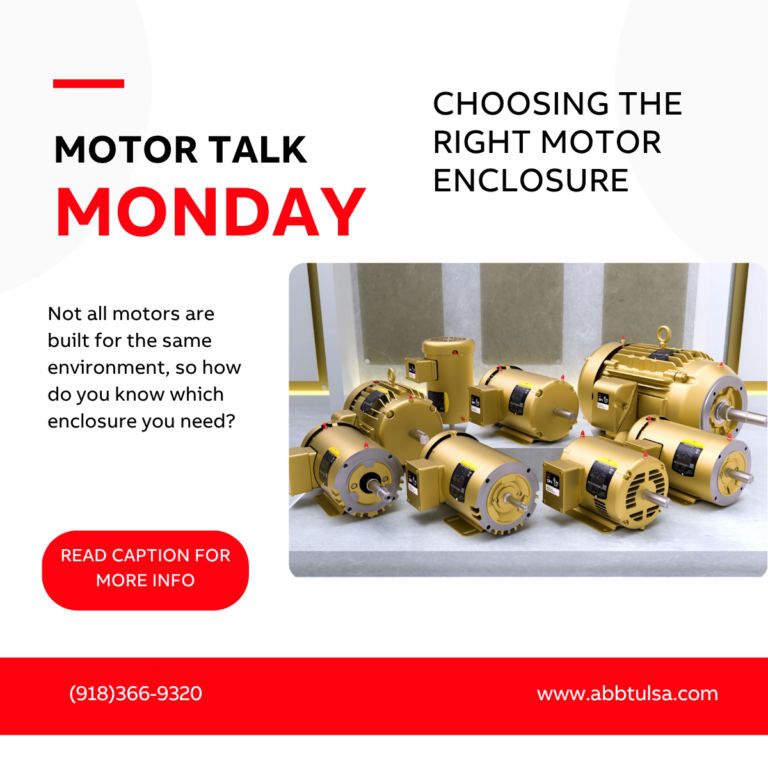
#MotorTalkMonday TEFC explained You've probably seen TEFC when it comes to motors, but what does this mean? TEFC is a type of enclosure which stands for Totally Enclosed Fan Cooled.…
#MotorTalkMonday - electric motor space heaters Ever wondered why some electric motors come equipped with space heaters? These space heaters are not the same kind you might have under your…
#MotorTalkMonday: NEC vs ATEX – What’s the Difference? When it comes to hazardous locations, choosing the right motor isn’t just about performance, it’s about safety and compliance. Two major standards…
#MotorTalkMonday - replacing vs. rewinding a motor When a motor fails, the big question is should you rewind or replace? When faced with this decision, here's a helpful cheat sheet:…
#MotorTalkMonday - how to calculate annual savings from motor upgradesWe've probably all heard about how upgrading your motors can save both energy and money, but how exactly is this calculated?…
#MotorTalkMonday - why premium motors run coolerWhen it comes to electric motors, heat is the enemy of longevity. Excessive operating temperatures can degrade insulation, shorten bearing life, and lead to…
#MotorTalkMonday - high inertia loadA high inertia load means the driven equipment resists changes in speed because it has a large moment of inertia. In simple terms, it takes more…
#MotorTalkMonday - how temperature rise affects motor lifeDid you know that a motor’s insulation life can be reduced by half for every 10°C increase in operating temperature? That means even…